A field trip for my dLab 2 (Design for Environmental Change) class. We visited the Royal Botanic Gardens here in Edinburgh. I had a few thoughts 1 on my mind as we wondered through the garden and I thought I’d write them up a bit more and flesh them out.
Rachel, organised the trip to show us how “Nature Based Solutions” might start to temper our design thinking to be more inline with the system we are working in and its many Entanglements. We we’re also able to attend two exhibits/gallery’s. One named “Grasses” and the other “Earth Matters”.
Raingardens and Nature Based Solutions
Our world is facing interconnected climate and nature crises. Global temperatures are rising, rainfall patterns are becoming more extreme, and species and ecosystems are degraded and lost. Here in Scotland, temperatures are increasing across all seasons, winters are becoming wetter, summers drier, and sea-level rise continues to accelerate.

With many people making their homes in towns and cities, these changes are increasingly felt in our daily lives. Intensified flooding and drought affect heavily modified urban landscapes, heatwaves are amplified by the streets and buildings that surround us, and stark inequalities persist in both health outcomes and access to nature across neighbourhoods. People are a part of the natural world, so climate and nature crises are ultimately people challenges too. When we address these interconnected issues all together as “the big picture” we have an opportunity to do things differently, rethinking how we plan, design and manage the places where we live. We can create something better, more resilient, sustainable, and equitable than what we did before.

This integrated action research is the field of nature-based solutions:

“actions to protect, sustainably manage, and restore natural or modified ecosystems that address societal challenges effectively and adaptively, simultaneously providing human wellbeing and biodiversity benefits"

- International Union for Conservation of Nature and Natural Resources (IUCN). This definition was adopted at the 2016 IUCN World Conservation Congress with the Resolution 6.069 (WCC-2016-Res-069).
The Raingardens
Are a number 2 of interventions to help the Botanics cope with the increasingly wetter winters, and perhaps to explore less “forceful” forms of gardening. Using a mixture of Sustainable Urban Drainage Systems (SUDS), drainage ditches, and particularly thirsty plans 3 .
The first one we saw was the newest, the Oak Lawn raingarden. There used to be a big old sycamore on that spot, and its roots were quietly doing loads of work holding the hillside together and soaking up water. When it got sick and had to come down, all that water started heading for the John Hope Gateway instead. Back in 2024 the Botanics worked with Heriot-Watt to make a hydrological map of the whole garden, basically simulating a big storm and seeing where the water ends up pooling. The Gateway is one of those low points. So now there’s a drain across the path that spills into a little stream in the lawn, and the shape of the ground and the planting slow it down until it ends up in a wallow where it can just sit for a while. The tree in the middle (a cork oak) gets its own wee island so it doesn’t get its feet wet. Part of it was designed by the RBGE horticulture students too, which I liked.
The second is the flagship one, the original raingarden from 2019, also done with Heriot-Watt. This is the success story. They don’t water it at all, the plants are doing great, and it hasn’t flooded since, not even in the July 2021 storm which was meant to be a 1-in-150-year one. The bit that got me was the soil. They use more organic matter than you’d normally put in a SUDS, so the plants actually thrive rather than just cling on, and end up being active partners in moving the water around (drinking it up, sweating it out 3). They’ve also been tweaking it as they go, pulling out some of the giant rhubarb (a bit invasive) and letting the umbrella plant and teasel fill in instead, and swapping a strip of grass at the back for trees and ferns.
The third was the stormwater planters, which are less of a garden and more of a clever box. A roof funnels all the rain that would have fallen on that patch of ground into one gushing drainpipe. Instead of that going straight into the drains, it gets piped into a planter, the plants drink it, the roots and soil filter it, and whatever’s left over gets held and let out slowly. Some of them are part of Climate Ready Craigleith with Scottish Water and have sensors at four different depths, so a PhD student can see how different plant mixes change the flow. The timber cladding is larch from their Benmore garden, felled because of phytophthora, which is a nice little reminder that climate change isn’t just storms, it moves pests and diseases around too. The two at the back were originally at COP26 and have one of the rarest plants I’ve probably ever walked straight past, the alpine blue-sow-thistle.
What I really liked across all of it was how they talk about it. Every stop on the tour had a section called “What are we learning? So how are we adapting?”. They call it Adaptive Management: make a plan, try it, monitor it, adjust, go again. Which is… just the design process? Iterate. But with plants, and over years rather than sprints. There’s something reassuring about a big respected institution openly going “that bit didn’t quite work, so we changed it”. It feels less about forcing the garden into a shape and more about working out what the water wants to do and giving it somewhere nice to do it.
Other bits
There was a lot more than just the raingardens. The Living Lawn is a lawn full of low wildflowers instead of one type of grass, and an MSc study found it soaks up more water and holds more life than the normal lawn next door, so now they just mow it less. Running through it is a new River of Flowers, a meandering strip of native wildflowers sown this June and left to grow wild. It’s meant to look like a river wandering across a floodplain, but made of flowers, and acts as a seedbank for the rest of the lawn. Lovely idea.
On the green roof, the tour script talked about the “messy middle” of nature based solutions, where the maintenance falls through the cracks between departments and nobody really owns it. That felt very familiar from basically every organisation I’ve ever worked with.
Trees as cool blankets
Something Rachel said stuck with me: trees aren’t just for shade, they act as “cool blankets” for the city. I knew they were nice and shady, obviously, but I hadn’t thought about them as a sort of mini AC unit before. I’d been thinking of it as convection, but it’s as much the sweaty plant thing again 3. They pull water up out of the ground and let it evaporate off their leaves, and evaporating water takes heat with it. So a tree is actively cooling the air around it as well as blocking the sun. You could really feel it on the meadow path by the West Gate, under the canopy, then stepping back out onto the sunny lawn.
The exhibits
Grasses
Small but nice. Some beautiful weaving displays and a few books I want to check out. Hubbard’s Grasses was on display, which got me a bit. My grandfather, my dad, and I all own a copy. It was always more relevant to their fields (biology, agriculture) than mine, but it was nice to see it there, like spotting someone you know across a room.
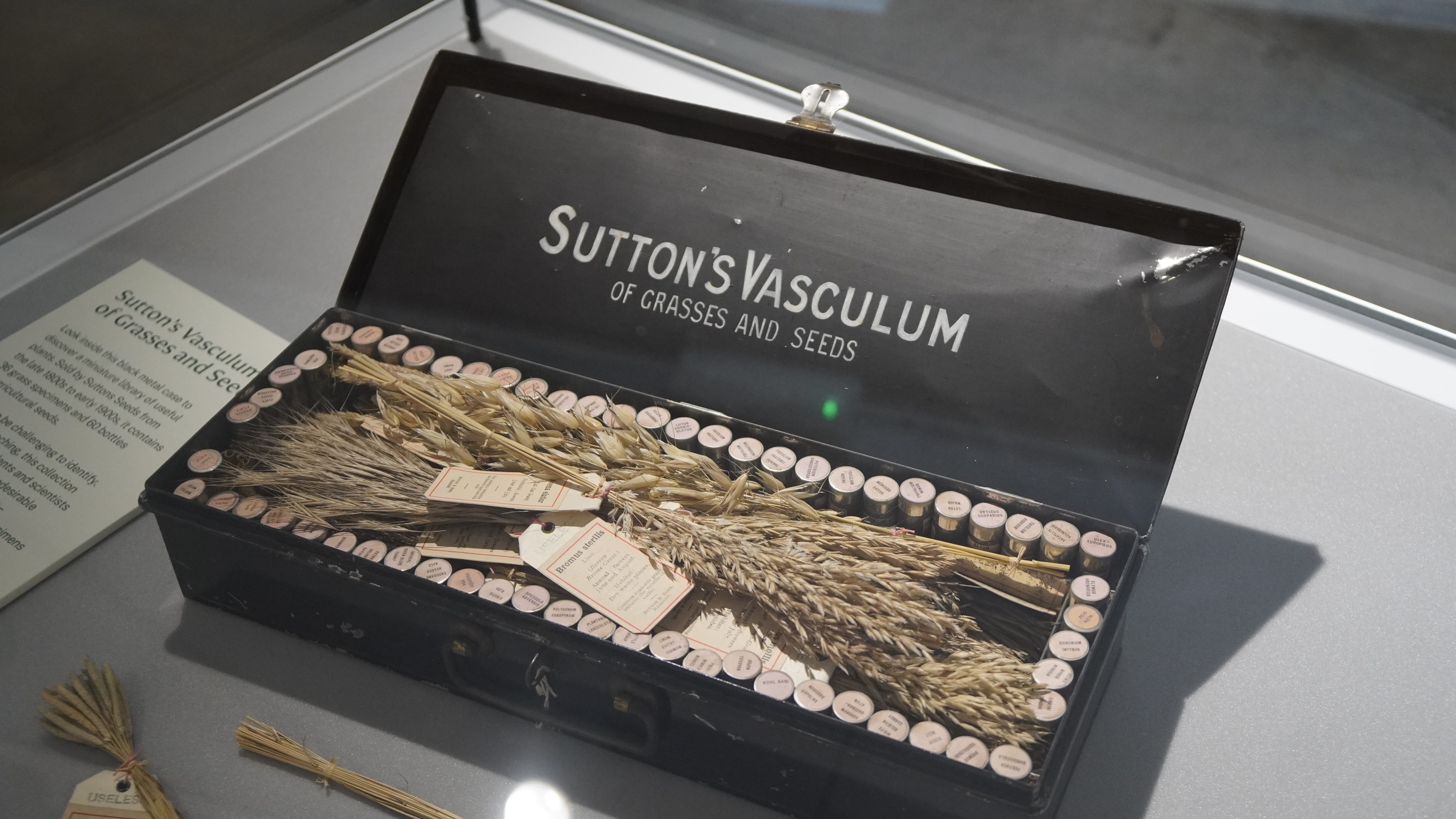
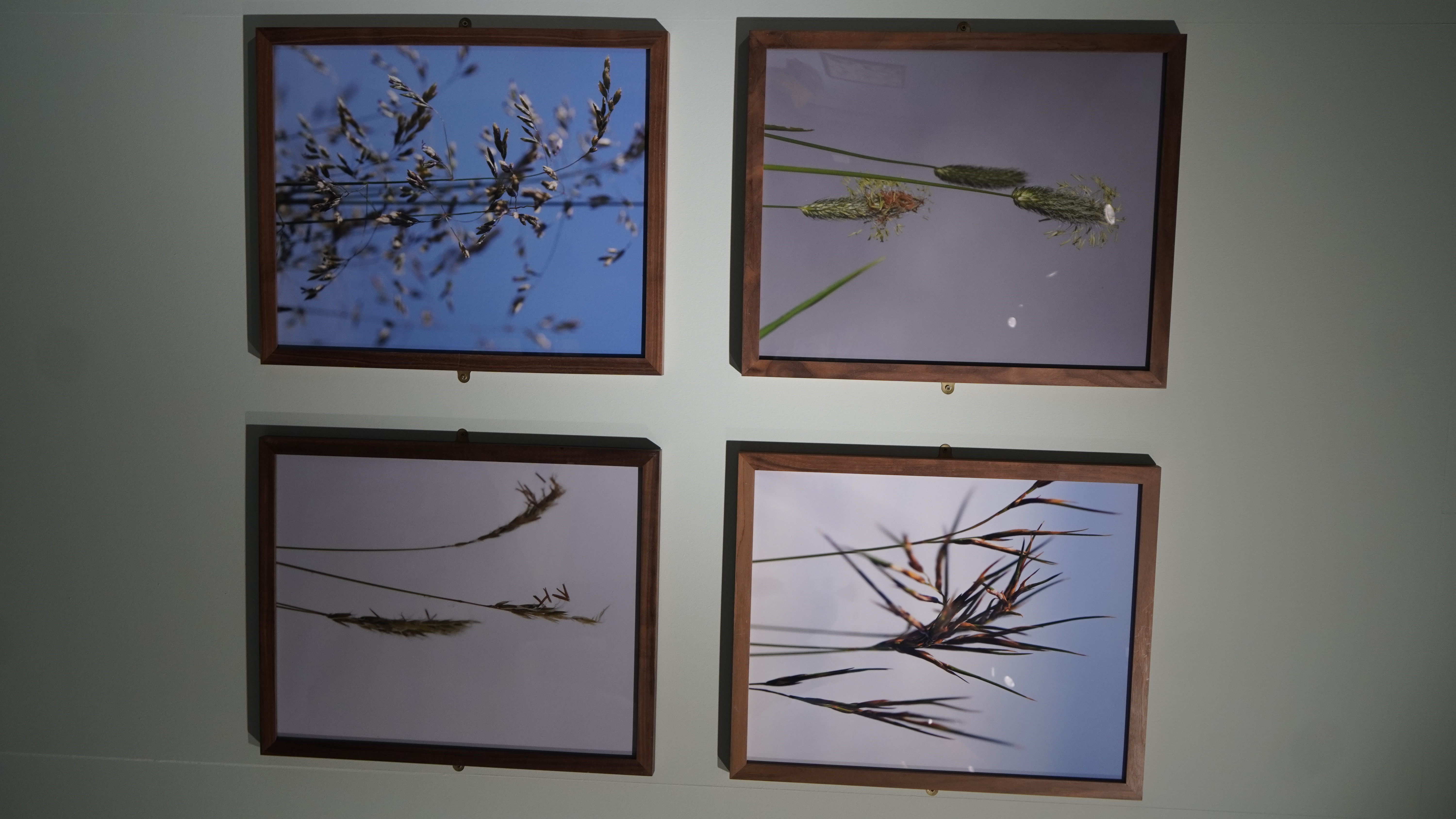
Earth Matters
The thing that grabbed me was a Dorodango 4. I’d completely forgotten about them, but when I was a child I was obsessed with the idea of making one. I think I learnt about them from a Mythbusters episode. A ball of mud, polished by hand until it shines like a marble. Might have a go.
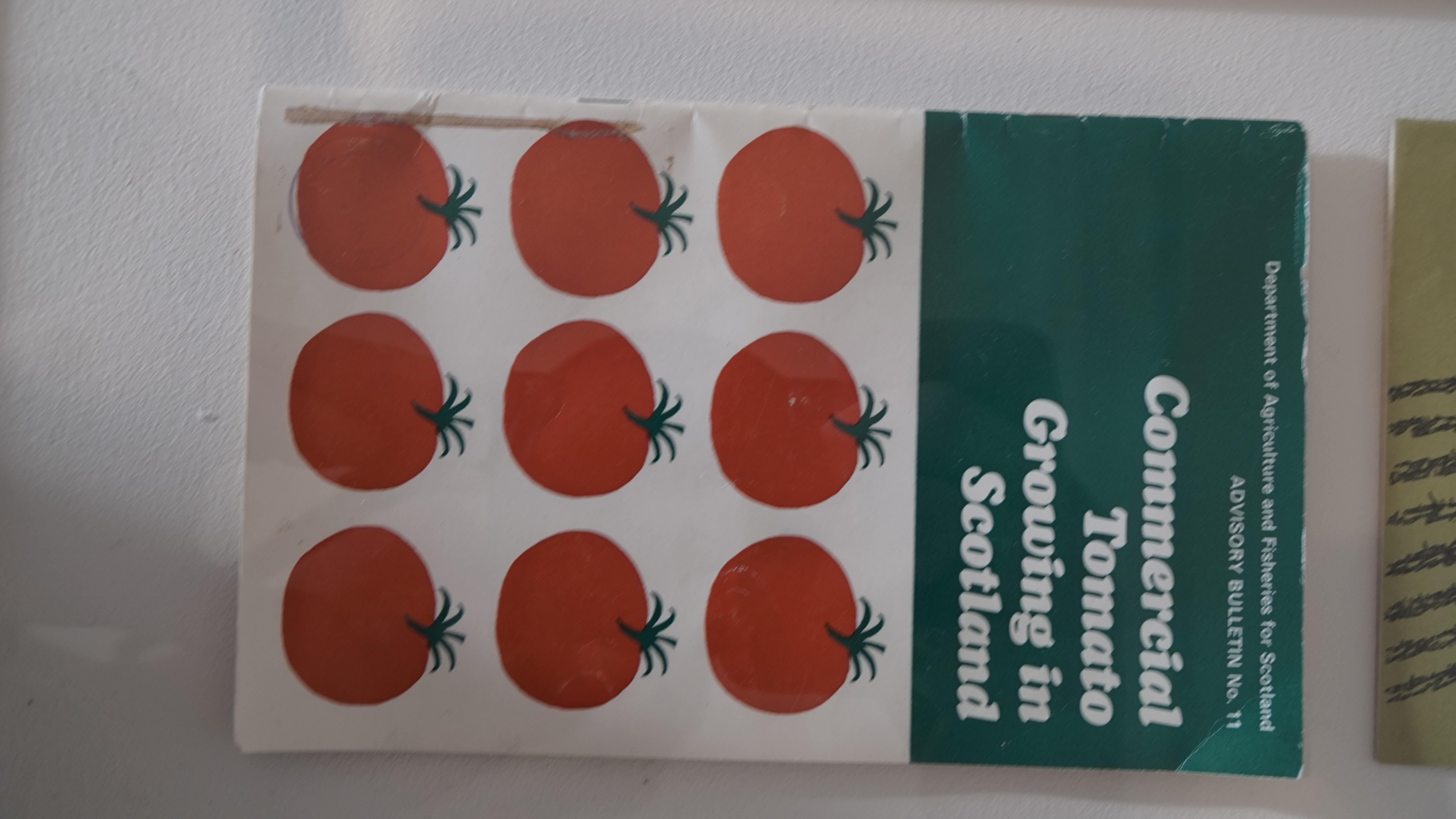
Whilst maybe not the focus of the exhibit, I also found some beautiful old documents that seem to be from the Scottish government. One was on growing tomatoes. They had that lovely modern (as in the 1950s–1980s) design to them and reminded me of the EPA and NASA stylebooks. Proper public information design.
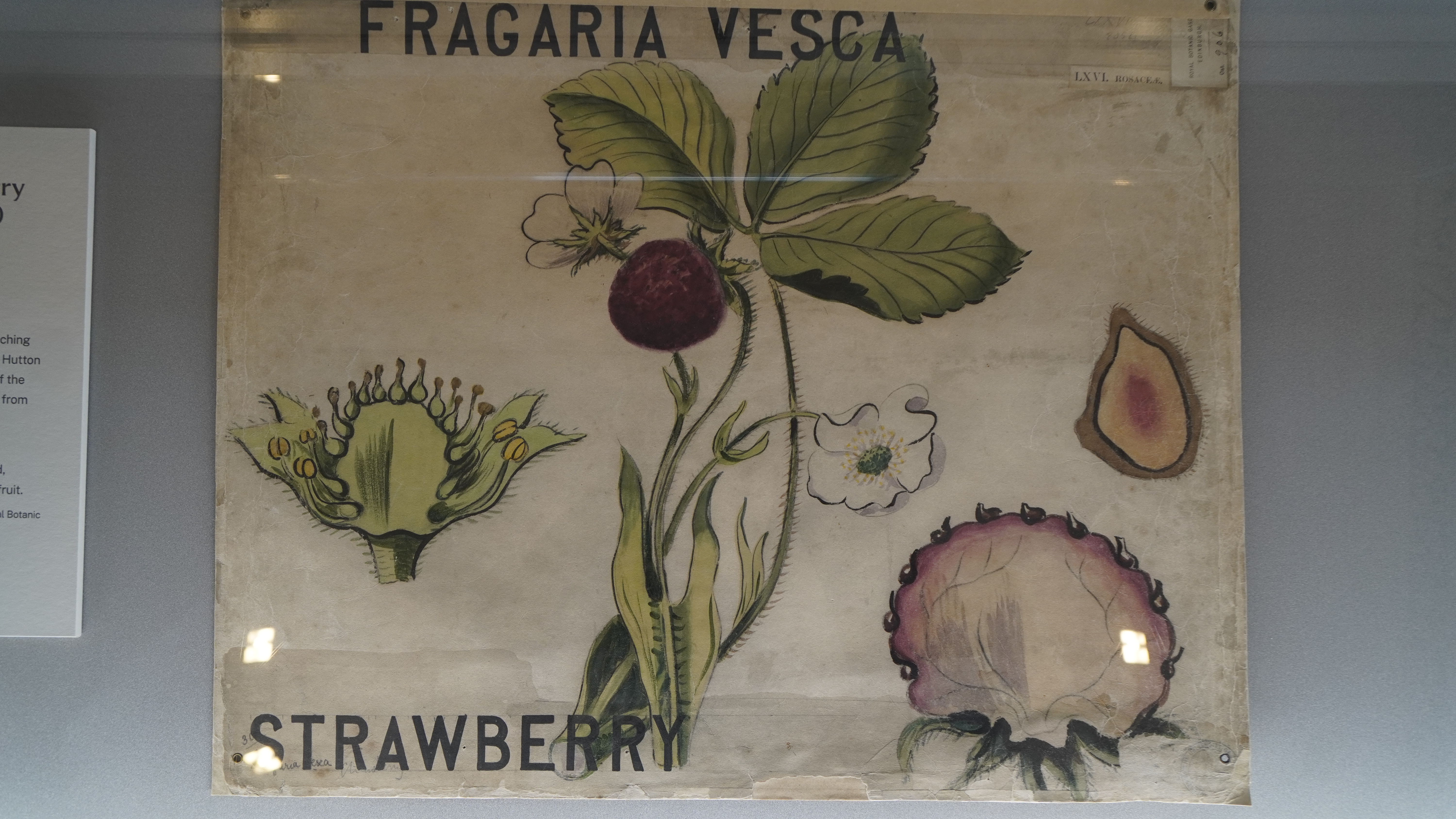
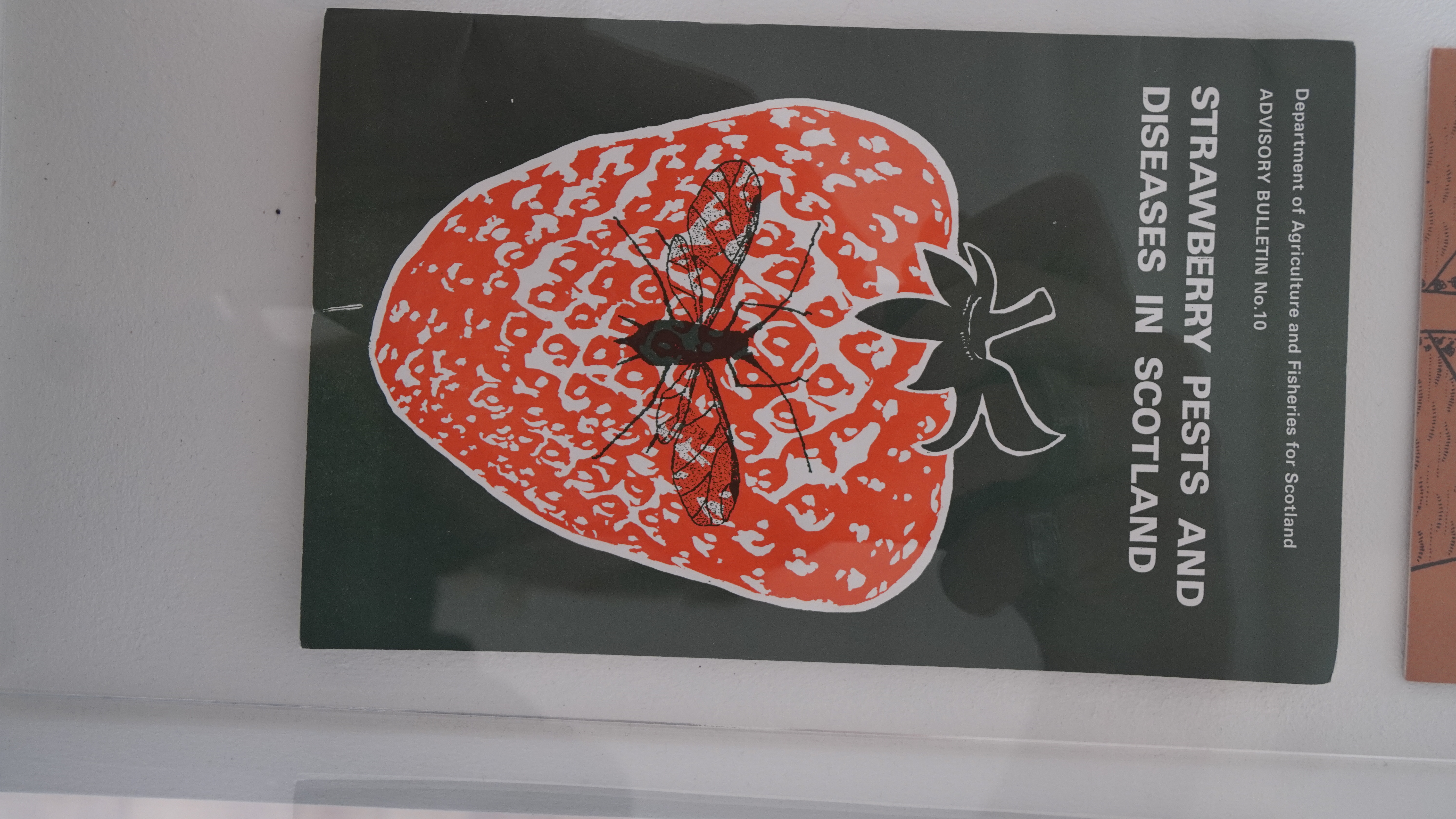
The new look
Who did the facelift for the gardens? The graphic design I mean, I think it’s changed since I was last here. It’s nice, sort of fine arty and authoritative at the same time. It uses one of those engraved or semi-serif typefaces you see everywhere these days (especially in posh restaurants), but it works here. Not as boring and authoritative as a grotesk, and not too dated like a Garamond. It’s also nicely executed and broad in how it’s applied. They’d really touched every bit of the garden with it: flat but earthy colours, white for the text, and then lots of photos, photos of people and plants, which adds that human touch.
Found out. It was Johnson Banks, back in 2024. The typeface is a custom one called Sibbaldia, a tweaked version of Nomada Incise. So “engraved” wasn’t far off: it’s literally an incised face, made to look chiselled. Named after the wee alpine plant in their logo, which is named after Robert Sibbald, who founded the garden. Nice bit of circularity. The capitals were on purpose too, meant to feel more Royal. And the people-and-plants photos I liked came from a big shoot across all four gardens by Eilidh Cameron. So that human touch was very much the plan. Pleased my eye wasn’t totally off.
Anyway, lots to chew on. Want to go back in the summer when the River of Flowers is properly going.
So in some ways they are more "sweaty" than "thirsty" ...gross.
Footnotes
-
I have so many new thoughts on my mind at the moment. Studying at ECA has been as if I were on a pebbled coast, laying on my back and waves ebbing over my face and mind. I’m trying my best to hold onto them and stick them to my Gumball of thoughts and ideas. ↩
-
3 I think.. At least that’s what I saw. ↩
-
“Thirsty” plants are ones which drink a lot of water and then have a large surface area for persiprating this water back into the atmosphere. ↩ ↩2 ↩3
-
Dorodango (泥団子) is Japanese for “mud dumpling”. You shape mud into a ball, then keep dusting it with finer and finer dirt and rubbing it until it goes glossy. Takes hours. Very patient craft. ↩